
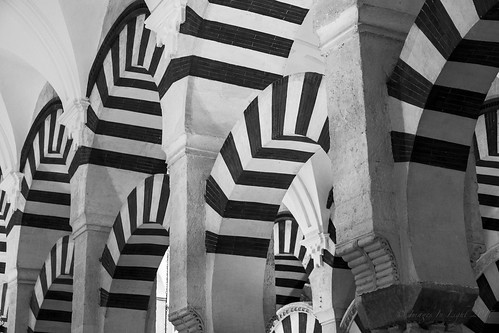
Fuji X-T2, XF 16-55mm f/2.8 R LM WR
f/4, 1/35 sec, iso 3200, 47mm
Córdoba, located in south central Spain, about 3 hours south of Madrid, once a Roman city, then a Moorish ruled caliphate and now a beautiful Spanish city. Full of surprises, wonderful architecture, delightful people and with today's ability to use Airbnb, an affordable destination spot on your way to Andalusia. We stayed in a penthouse suite in the old town not far from The Mezquita for $66 per night.
the Historic Center of Córdoba that was declared a World Heritage site by UNESCO in 1994.
the Historic Center of Córdoba that was declared a World Heritage site by UNESCO in 1994.
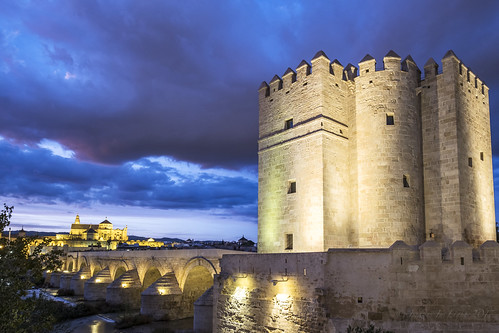
Fuji X-T2, XF 10-24mm f/4 R OIS
Built in the 1st century BC, the Roman bridge crosses Guadalquivir river, leading in to the Barrio de la Catedral. A short walk from the Cathedral, the Roman Bridge of Cordoba and its Calahorra tower, which was added by the 16th century.
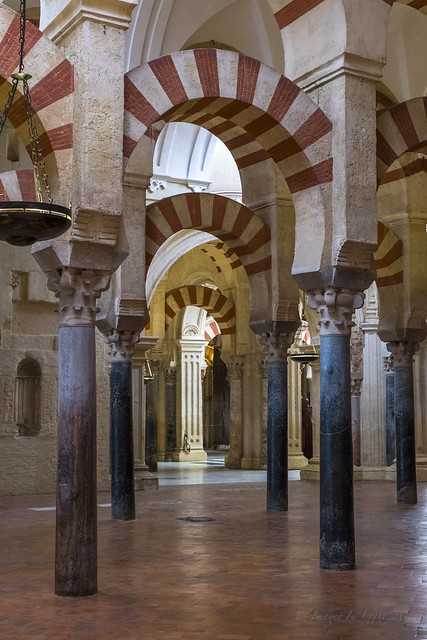
"The Mosque–Cathedral of Córdoba(Spanish: Mezquita-Catedral de Córdoba), also known as the Great Mosque of Córdoba (Spanish: Mezquita de Córdoba) and the Mezquita, whose ecclesiastical name is the Cathedral of Our Lady of the Assumption (Spanish: Catedral de Nuestra Señora de la Asunción), is the Catholic cathedral of the Diocese of Córdoba dedicated to the Assumption of the Virgin Mary and located in the Spanish region of Andalusia. The structure is regarded as one of the most accomplished monuments of Moorish architecture."
In 784 Abd al-Rahman I
ordered construction of the Great Mosque, which was considerably
expanded by later Muslim rulers. Córdoba returned to Christian rule in
1236 during the Reconquista, and the building was converted to a Roman Catholic church, culminating in the insertion of a Renaissance cathedral nave in the 16th century.

