Monday, August 26, 2013

Super Telephoto Compression

Ross_Murphy_20132242
Image: 5D Mk III, EF 300 f/2.8 L IS, 1/800sec at f/11

Larger Image

Using a super telephoto lens compresses objects in an image, in other words it appears to bring distant objects closer together than they normally appear, in this case the cruise ship appears a lot closer to the sun, where a wide angle lens would have done the opposite.

Some times a wide angle lens is not what we want to reach for when doing a landscape shot, I don't get to use this lens (EF 300 f/2.8L IS) a lot due to its size, but I do enjoy using it for landscape work when I can.

Ross

Tuesday, August 20, 2013

Atmosphere

 Image:Near camp Kiser, 5D Mk III, EF 24-70 f/2.8L II, 47mm, f/11 at 1/100 sec, tripod.
Larger Image

 Image:Ptarmigan Ridge, 5D Mk III, EF 24-70 f/2.8L II, 70mm, f/11 at 1/500 sec, tripod.
Larger Image 
.
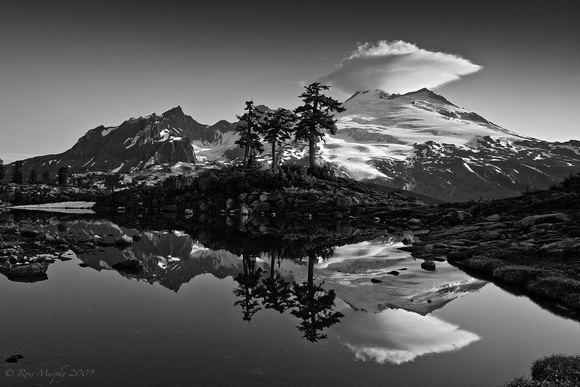
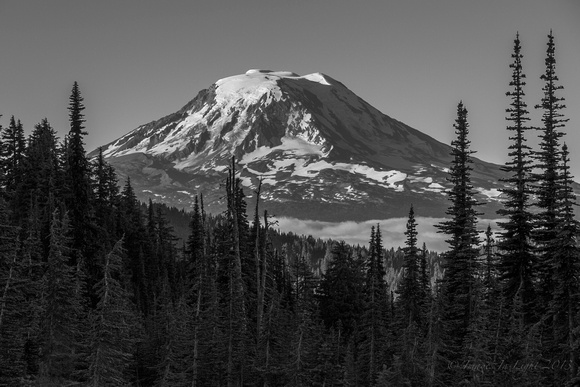
Its not always about light, sometimes atmosphere is needed to add a little extra to an image, I have had available time but decided not to go on a shoot because the weather is just to nice. I like going in to the mountains just after a storm or coming out just as a storm approaches.

I remember spending a stormy night in a lookout on top of Park Butte the next morning the lenticular cloud over Mt Baker was fantastic.


Mt Baker, North Cascades.

Mist, fog, snow, clouds or even rain can add a lot of atmosphere to a scene, I especially like clouds swirling around mountain tops.

Columbia Ice Field, Banff, Ca.

Plains in Wyoming.

Some times its worth getting a little wet.

Ross


Wednesday, August 14, 2013

ISO 25,600, whats it for ?


 Image: 5D Mk III, EF 24-70f/2.8L II, 70mm 1/125 sec at f/2.8, ISO 25,600.
Larger Image

Low light photography like this was not even conceivable 10 years ago, now with only a candle and ambient night time light we can shoot at ISO 25,600 and have usable images, its really quit extraordinary.

Ross_Murphy_20132138

100% crop

When the image is downsized as in the top image, noise is virtually none existent, the 100% crop shows some noise, but this is still incredible performance for today's cameras.

This will be very helpful in low light performance and concert photography, not to mention a new form of portrait photography.

Ross

Images In Light

Tuesday, August 6, 2013

My favorite place to shoot


Image: 5D Mk III, EF 24-70f/2.8L II, 70mm, f/16, 1/20th sec, tripod.
Larger Image


Image: 5D Mk III, EF 24-70f/2.8L II, 70mm, f/11, 1/30th sec, tripod.
Larger Image

Image: 5D Mk III, EF 70-200 f4L IS, 200mm, f/4.5, 1/250th sec, ISO 400.
Larger Image

Most photographers have a favorite place to shoot, mine would have to be Mt Rainier National Park.

The ever present Mountain in these parts is Mt Rainier or as we call it "The Mountain", it has attracted me from a very young age and I'm a regular visitor to the park in all four seasons, I ski in the winter and hike the rest of the year, I even managed a summit back in 2000 with a group of friends.

When I go hike the Mountain I usually come across wildlife of some kind, this time it was a mother Black bear and her two cubs, but this is one of my favorite weeks to be on the Mountain, the Bloom is in peak near Chinook pass and I chose the Naches Loop for this days hike.


Image: 5D Mk III, EF 100f/2.8L IS, f/7.1, 1/125th sec, hand held.


Image: Upper Tipsoo lake, x100s, 1/280sec at f/8, ISO 400

The hike starts and ends at Tipsoo lake, so I started there at sunrise and completed the hike 2 1/2 hours later, I highly recommend it if you go to Rainier, fall will be especially nice as well maybe the first week of October to catch the fall colors


Image: Mountain Anemone, 5D Mk III, EF 100f/2.8L IS, f/3.5, 1/4000th sec, hand held, sky background.

Ross 

Thursday, August 1, 2013

Lumix GX7


Updated new video from the Lumix product manager


Another very interesting camera announcement, this time a micro 4/3's sensor, recently they have had some excellent new offerings, including the older Olympus E-M5 and the newer E-P5 here

This one ticks all the right box's: dual control wheels, AE/AF lock button, good auto focus,  hi-res tilt screen, interchangeable lenses, touch screen menu (includes AF point), state of the art tilting electronic view finder, a new 16mp sensor that includes image stabilization and a built in flash, an enthusiast's camera for sure.

The Lumix GX7 has a wide range of features and can use a wide range of lenses, including the excellent Olympus  45mm and  75mm primes. This looks like a pretty complete camera, it has all the controls in the right place, a new Panasonic 16mp sensor and promising auto focus, we shall see when the full reviews are out.

Interview with Ian Berry in Rome.


Things are looking better in the Micro Four Third's world and I am looking forward to carrying around a smaller camera some of the time that can give me excellent image quality.

DPreview here

See preview here and here

Reviews: here , here
here

Camera Labs here

Amateur Photographer here

 order the GX7  for $999.00 here

Panasonic site and here

Also announced is the Panasonic/Leica 42.5mm f/1.2 Nocticron lens this is the fastest Micro Four Thirds lens yet available for the system.

DxOmark selects best lenses for M43's 


Ross

Images in Light

Monday, July 29, 2013

Lightroom - Black and White


 Image: 5D Mk III, 70-200f/4L IS, 150mm at f/11, 1/125th sec, tripod.
Larger Image 

 select for larger image

Making black and white images with Lightroom is very easy and pretty effective, the hard part is choosing the right image to use.

Fortunately, Lightroom has made it so easy to make B and W images, its just a button press away, after normal processing; curves, shadows and highlights, etc.. go to the adjustments tab and just select B & W, then all that's left to do is slide the color bars, for example, to darken or lighten a blue sky just slide the blue slider to get the right effect, remember, contrast is your friend in a B and W image.
White balance can also be used to brighten are darken the image and split tone will add warmth or coolness to your image, the great thing about Lightroom is this wont effect the original image. I will usually make a virtual copy of the color image to create my B and W image from so I have it to compare.

Things to look out for; ghosting around high contrast areas and banding in solid colors when you go to extremes with the sliders, ghosting can usually be fixed with PS, but banding requires backing off on the slider.

There are also a lot of black and white presets out there on the web, do a search and you will find loads of free presets you can download, including these from Adobe, no need to pay for presets there are lots of free ones on the web and tutorials on how to make and install your own, see this link.

Ross

Images In Light

Monday, July 22, 2013

When to use AI Servo focus

  Image: 5D Mk III, EF 70-200 f/4L IS, 200mm at f/4, 1/500 sec.

Image: 5D Mk III, EF 70-200 f/4L IS, 200mm at f/4, 1/640 sec.

Image: 5D Mk III, EF 70-200 f/4L IS, 75mm at f/4, 1/800 sec.


I love to photograph Ducky, she is an energetic fast moving subject that loves to please,
so I set my camera up special for her ; ), its the same as if I was doing a sporting event or shooting wildlife in Yellowstone.

AI servo mode was made for moving subjects; in aperture priority, focus set to AI servo, drive set to high speed, ISO 100 and with my EF 70-200f/4L IS lens set to wide open at f/4, where I know its very sharp and has the depth of field to cover her eyes to ears, that also allows for a fast shutter speed on a sunny day, if its over cast I may use auto ISO, but if its sunny its ISO 100. I also aim for a minimum shutter speed of 1/125 sec, so a lot of the time I'm in auto ISO.

Zoomed in I use pretty much the center focus point for this type of shoot and keep it trained on her eyes at all times, zooming out as she moves towards me, refocus shoot, repeat, its pretty simple really and the auto focus of the 5D Mk III does the rest.

In menu settings: Case 6 (for subjects that change speed and move erratically), first image priority, manual AF point selection.

One thing about the 5D Mk III is, its auto focus is incredibly accurate and fast, with a little practice, it becomes second nature.


Ross

Wednesday, July 17, 2013

Published With National Geographic


Full page on the first tab of the book shown below


Its always nice to be published, but when your image is picked up by National Geographic and I get to bill them, its a sweet feeling. I am very happy to be published with one of the world's leading publications, the book will have 50,000 copies in print.

Ross

Images In Light

Monday, July 8, 2013

Perspective


Image: 5D Mk III, EF 24-70 f2.8L II, 30mm f/11, 1/30 sec, tripod.
Image: 5D Mk III, EF 24-70 f2.8L II, 41mm f/16, 1/10 sec, tripod.

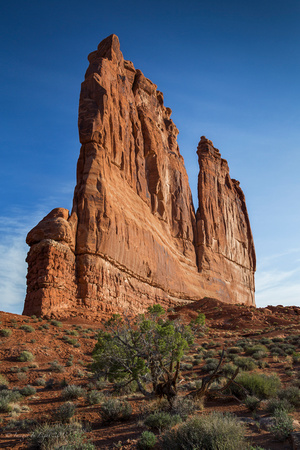
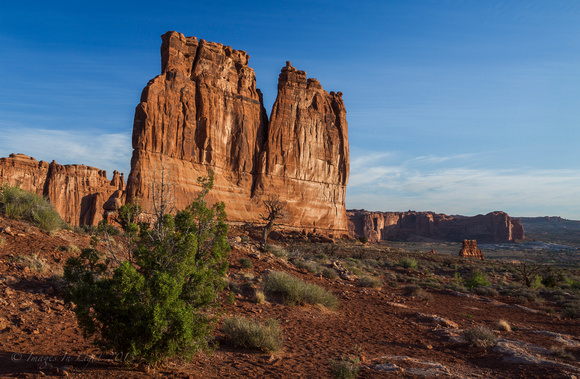
In trying to show the perspective of this mitten in Arches National Park, getting down low and not shooting to wide proved to be the right method, shooting ultra wide would have shown the entire valley in perspective but shooting moderately wide and getting down low seemed the best approach for showing the massive rock mitten of Courthouse Rock.

Moving back further away put the rock in its context of the surrounding valley, 41mm gave me the perspective I was looking for with out having to much sky in the image and still retaining enough foreground interest.

Ross 

Tuesday, July 2, 2013

Canon 70D, suprise dual pixel AF speed technology


Dual pixel AF, amazing AF speed in Live view, this is what we have been waiting for in live view auto focus.

Why you ask? well remember when you take that point and shoot camera and try to take a picture and it searches and waits and then finally takes the shot? well here is the cure.

This chip used in a mirrorless interchangeable lens camera (MILC) like the EOS M2 will be great for having a fast and small camera that uses my existing camera lenses.

Canon has been looking for this answer for a while and this could put them back on top.

Some interesting video footage from The Imaging Resource here


Hands on the 70D at Tech Radar
Hands on the 70D at DP Review

The Digital Picture review

Review at EPhotoZine 

Review at PhotographyBlog

Order it here: Canon 70D


Ross

Images In Light

Wednesday, June 26, 2013

Fuji X-M1 Camera, who is it for?


 New Fuji X-M1

Nice clean layout with tilting 920k monitor 

Small with the 27mm lens

Still retro styled

This looks like a very nice addition to Fuji's X line of cameras, which I am very fond of, they are small and light and take terrific pictures with their large APS-C sensors.

The X-M1 is an entry level X camera that gives you Fuji's top of the line sensor (as of today), it is almost as small as their X-20 point and shoot camera and should appeal to people that want to step up their image quality from a point and shoot.
 Removed are the old style control dials and they have been replaced with modern consumer oriented dual control dials, the aperture can now be adjusted from a rear control wheel and the tilt LCD will be very nice for shooting unusual angles. It is not a complicated camera, it has been designed for beginner photographers and enthusiast's alike, while giving PRO DSLR like results (almost).

I look forward to the reviews, lets see how the auto focus pans out.

This is one I would like to try, personally I would stick with the Fuji primes, but the zooms they produce are not bad either.

Used with their XF 35mm f/1.4,  XF 14mm f/2.8 or the upcoming XF 56mm f1.2 one should be quite happy.

This will not be a cheap route to go, but it will give you super nice images in a very light package.

Fuji Site

Order it here: Fuji X-M1 

Ross

Images In Light

Monday, June 24, 2013

Creative Depth of Field


Image: 5D Mk III, EF 100 f/2.8L IS and EF 25mm Extender, f/3.2, 1/30 sec, tripod
 Larger Image

Ross_Murphy_20131692

Image: 5D Mk III, EF 100 f/2.8L IS and EF 25mm Extender, f/3.2, 1/20 sec, tripod

By using a wide aperture and an EF 25mm Extender, I got in very close to shoot this iris in my yard, creating an abstract macro image.

The EF 100 f/2.8L IS lens is one of the best macro lenses you can put in front of a Canon camera, it has exceptional micro contrast and color rendition along with some serious resolution, its a fine  example of Canon updating one of its lenses for the digital era.

Ross

Images In Light

Wednesday, June 19, 2013

Sharpness, Resolution and Depth of Field

5D Mk III, EF 24-70 f/2.8L II, 28mm at f/16, 1/40 sec, tripod


5D Mk III, EF 100 f/2.8L IS, and EF 25 Extension Tube, f/2.8, 1/40 sec, tripod
Sharpness, Resolution and Depth of Field, these all play a major role in the quality of the final image.
All are chosen by the photographer ultimately.

Resolution is determined by the quality of the lens, not the camera, you put a cheap lens in front of a 22 megapixel camera, you end up with low resolution images, especially if shooting beyond f/8 where diffraction starts to kick in.

Depth of field which the photographer selects by choosing the aperture of the lens, (f/1.4 - f/64)

Sharpness is what all of this adds up too essentially, choose a high quality lens, use a method for camera stability and understand depth of field vs diffraction and you will end up with high resolution, sharp images.

I almost never go beyond f/16 in any of my images, 35mm format lenses are just not up to par with medium and large format type glass that can be shot at f/64, but using good methodology and knowing your equipment you can maintain high resolution images that are tack sharp.

I chose the two images above to demonstrate the wide depth of field that can be achieved with good lenses, while maintaining very high resolution and sharpness.


Ross

Friday, June 14, 2013

Hidden Secrets

 Oneonta Gorge


Sacred Place
Larger Image

 White pocket
Larger Image

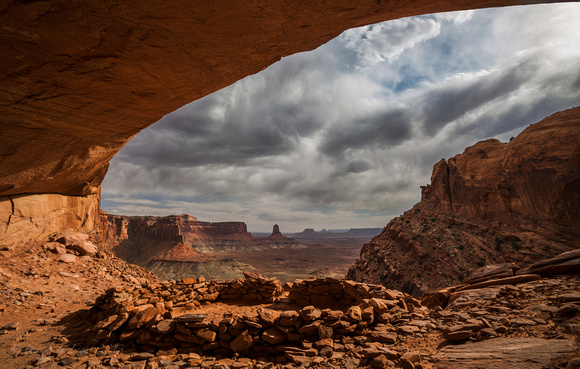
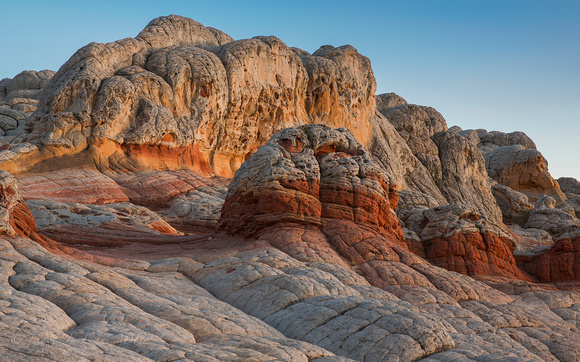
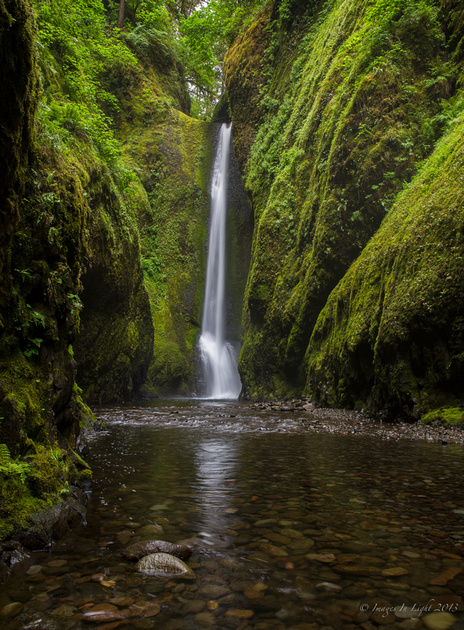
Should we reveal our secret places? A lot of photographers like to keep their secret places secret, I on the other hand don't mind letting on for the most part, the top image, Oneonta Gorge was one, a few people where trying to keep it secret, silly because its one of those difficult to get to places and not a lot of people are willing to wade through chest deep water to get there.

White pocket is a relatively unheard of place in Northern Arizona that is very difficult to get to, high clearance 4 wheel drive, navigation skills and some guts are required to make it all the way out there.

"Sacred Place" is a name I chose to give this image, which is a class 2 archeological site, I was asked by the park rangers not to reveal the location of this site and I will respect their wishes.

Some secret places are right in front of us and we don't even realize it, we just have to see.


Sunday, June 9, 2013

The Redwood Forest

5D Mk III, EF 24-70 f/2.8L II, 24mm, f/11 at 1/80 sec, Zeiss circular polarizer.
Larger Image

5D Mk III, EF 16-35 f/2.8L II, 32mm, f/16 at 1/13 sec, Zeiss circular polarizer.
Larger Image
 

The Redwood forest of Northern California has been on my radar for quit a while now, just across the Oregon border, its a pretty good drive, fortunately there are plenty of beautiful coastal stops along the way down.

Fog can be a daily occurrence on this part of the coast, but it can add dramatic lighting if you are fortunate to be there when it is being burnt away by the morning sun.

One of the best times to visit is late May when the Rhododendrons are in full bloom and the wild flowers are sprouting all along the coast.

There are endless possibilities  for photographers along this part of the Pacific coastline, including one of my favorites, Bandon Beach, near Coos Bay a few hours north of the Redwoods.


5D Mk III, EF 24-70 f/2.8L II, 24mm, f/11 at 2.5 sec, variable neutral Density filter.
Ross