Tuesday, October 27, 2015

The future of Light

Very interesting concept, that I am very excited about. Light is thinking outside the (DSLR) box. Is this the future of photography? Its interesting to consider, in order to get around a zoom lens, add cameras with varying fields of view. In my business I see a lot of new camera technology and there have been rumblings of multiple camera modules as a way of getting around zoom lenses, also for other reasons.......


I think we will see this technology soon in camera phones, maybe even the next iPhone or Samsung device. The technology has started to mature and calibration of these separate camera modules can now be done very accurately. I see this as very viable. I hope to test this one next year when its available.

This could easily replace small portable zoom cameras and if mature enough, small DSLR and ILC (mirrorless) cameras.


Light here

Fstoppers here

DPReview here

Ross

Images In Light

Friday, October 16, 2015

Sigma Art 20mm f/1.4

Sigma keeps introducing fantastic lenses and here is one I may consider to add to my lens arsenal.

The new Sigma Art 20mm f/1.4 DG HSM for EF


I would really like a fast wide angle lens that can really produce without breaking the bank, this could be the one. I'll keep you informed here, when the results are in.

Other nice ART lenses include the 24mm f/1.4, 35mm f/1.4 and the 50mm f/1.4

  • As part of the Art line within Sigma’s Global Vision series, this lens’ is designed to achieve truly notable optical performance and is ideally suited for creative and artistic applications.
  • Prime wide-angle 20mm f/1.4 lens is designed for full-frame format Canon EF mount DSLRs, and can also be used with APS-C models where it will provide a 32mm equivalent focal length.
  • Fast f/1.4 maximum aperture is well-suited for working in low-light conditions and also provides greater control over the focus position when using shallow depth of field techniques.
  • Both FLD glass and five SLD elements have been incorporated within the lens design to correct for chromatic aberrations throughout the entire focusing range and help to ensure high image sharpness, clarity, and contrast regardless of focus point or aperture setting.
  • A Super Multi-Layer Coating has been applied to lens elements in order to minimize lens flare and ghosting and contribute to producing contrast-rich and color-neutral imagery, even in backlit conditions.
  • The integrated HSM (Hyper Sonic Motor) realizes quick and quiet autofocusing, which is further complemented by an optimized AF algorithm to produce smoother focusing performance. The HSM also permits full-time manual focus control simply by rotating the focus ring at any time.
  • A rounded nine-blade diaphragm helps to produce an attractive out-of-focus quality.
  • Petal-shaped lens hood helps to reduce lens flare when working in strong lighting conditions and also offers some protection to the front element of the lens.
  • The lens is constructed using a Thermally Stable Composite (TSC) material, along with traditional metals, for greater precision and use in wide temperature variations.
  • The bayonet mount is constructed from brass for ensured accuracy and durability.
  • This lens is compatible with the optional Sigma USB Dock for fine-tuning different lens characteristics and updating its firmware.
Ross

Images In Light

Monday, October 12, 2015

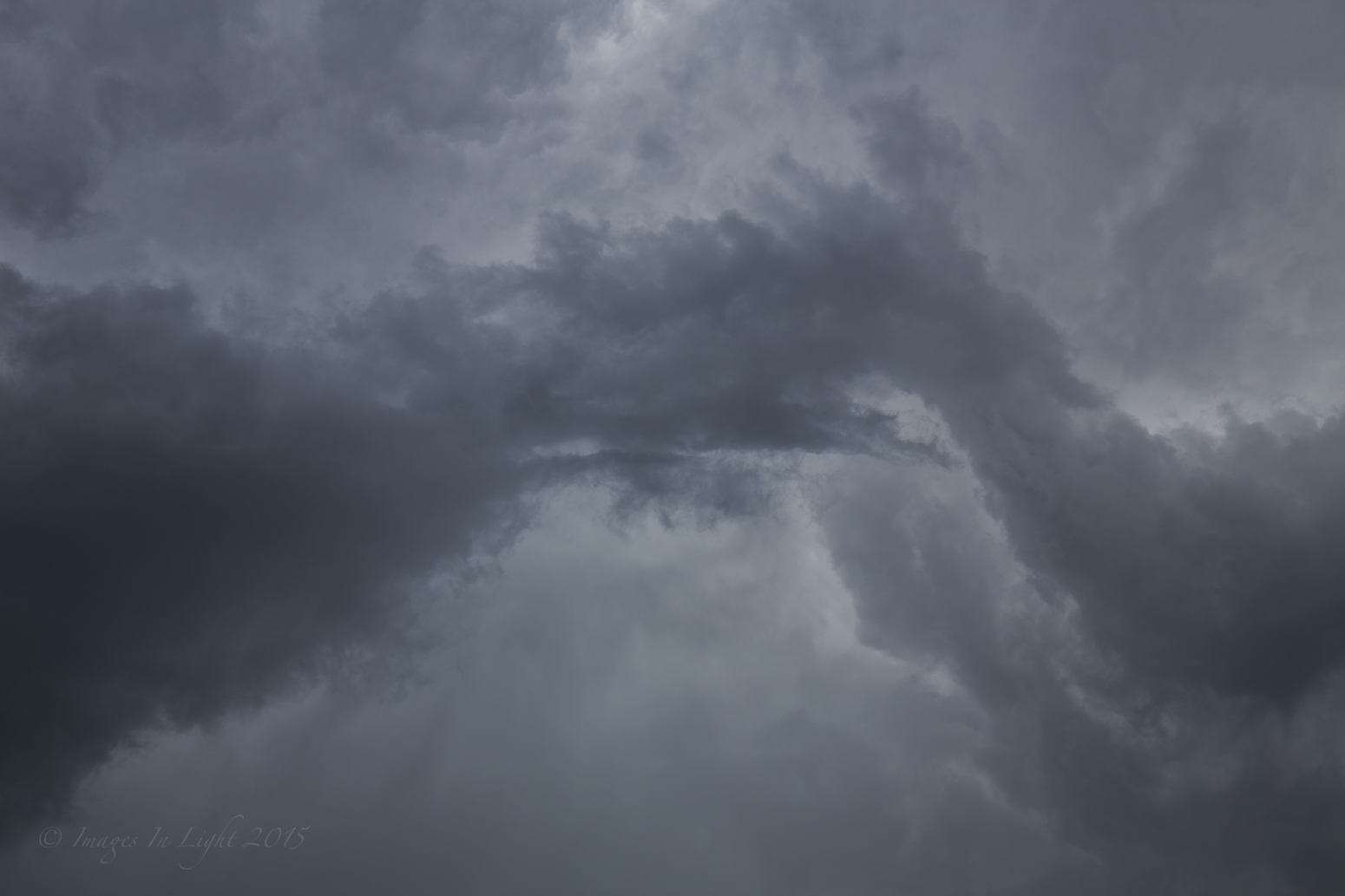
Chaos in color and black and white


Chaos - black and white

5D Mk III, 70-200 f4 L IS, f/10, 2 sec, Lee Big Stopper ND Filter

Chaos - color

5D Mk III, 70-200 f4 L IS, f/10, 1/500 sec, no filter

Exploring different ways of exposing a scene, I find it difficult sometimes to choose what I prefer. Using an ND filter gives me options to quickly make widely different exposures and decide later on what version of the scene I prefer. The Lee ND filter selection and Lee mount greatly increase the flexibility I have when I'm on a location shoot like this one.

I prefer the long exposure black and white version here, I think it works better for this windy, salt spray, misty day, adding to the stormy feel, even though it was a beautiful day. Taken from Soberanes Point in Big Sur.

Ross


Tuesday, September 29, 2015

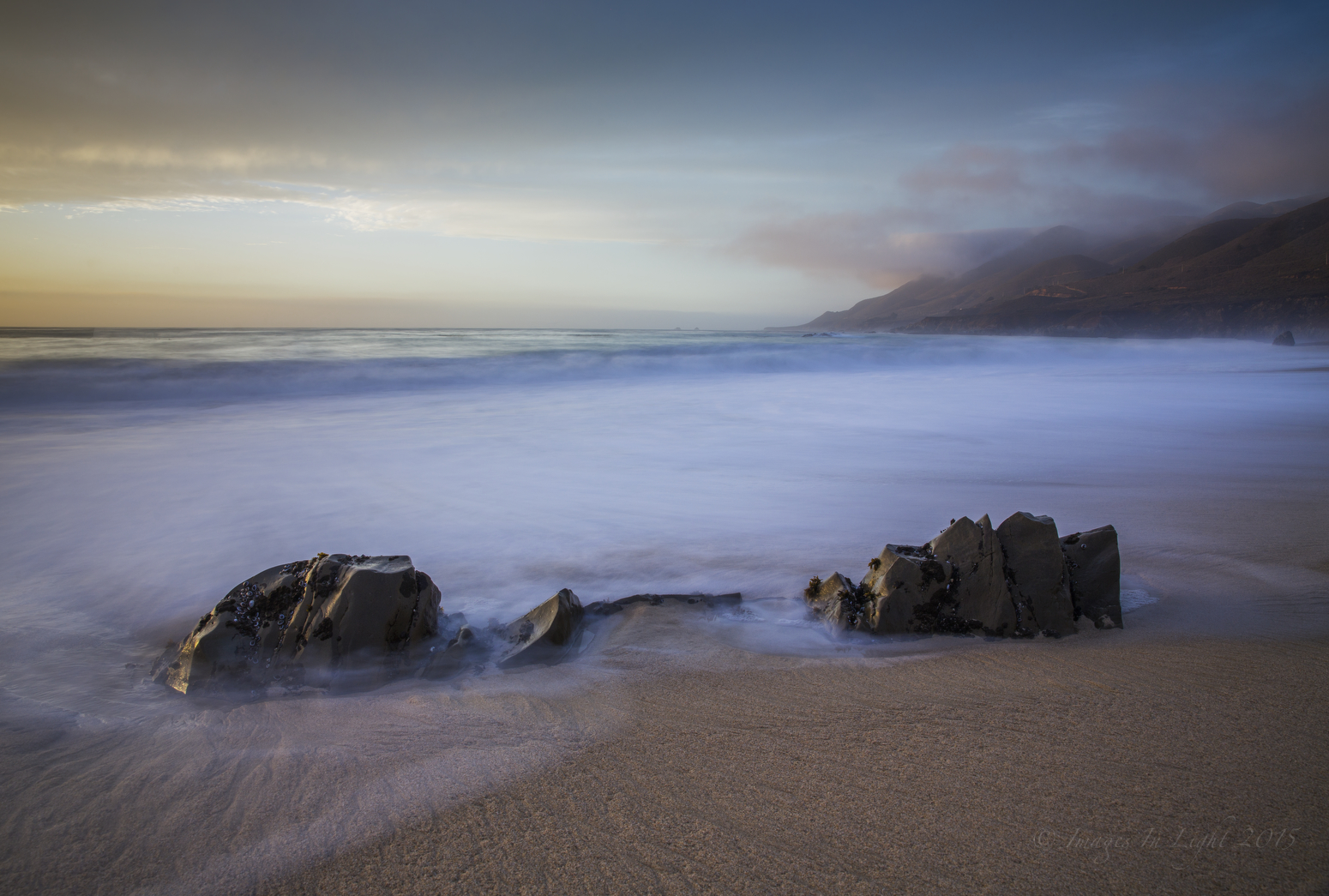
Capturing Atmosphere


Coastal California

5D Mk III, 24-79 f/2.8 L II, Lee Little stopper
f/11 at 2 sec

This was an interesting scene, when we arrived it was a hazy/foggy late evening and the atmosphere was not something I thought I was going to be able to catch, often times unsettled air does not allow for good images. Here I feel like I was able to capture the atmosphere of that moment and the long exposure helped, giving it a more dreamy look with the blurred waves.

Ross

Images In Light

Wednesday, September 23, 2015

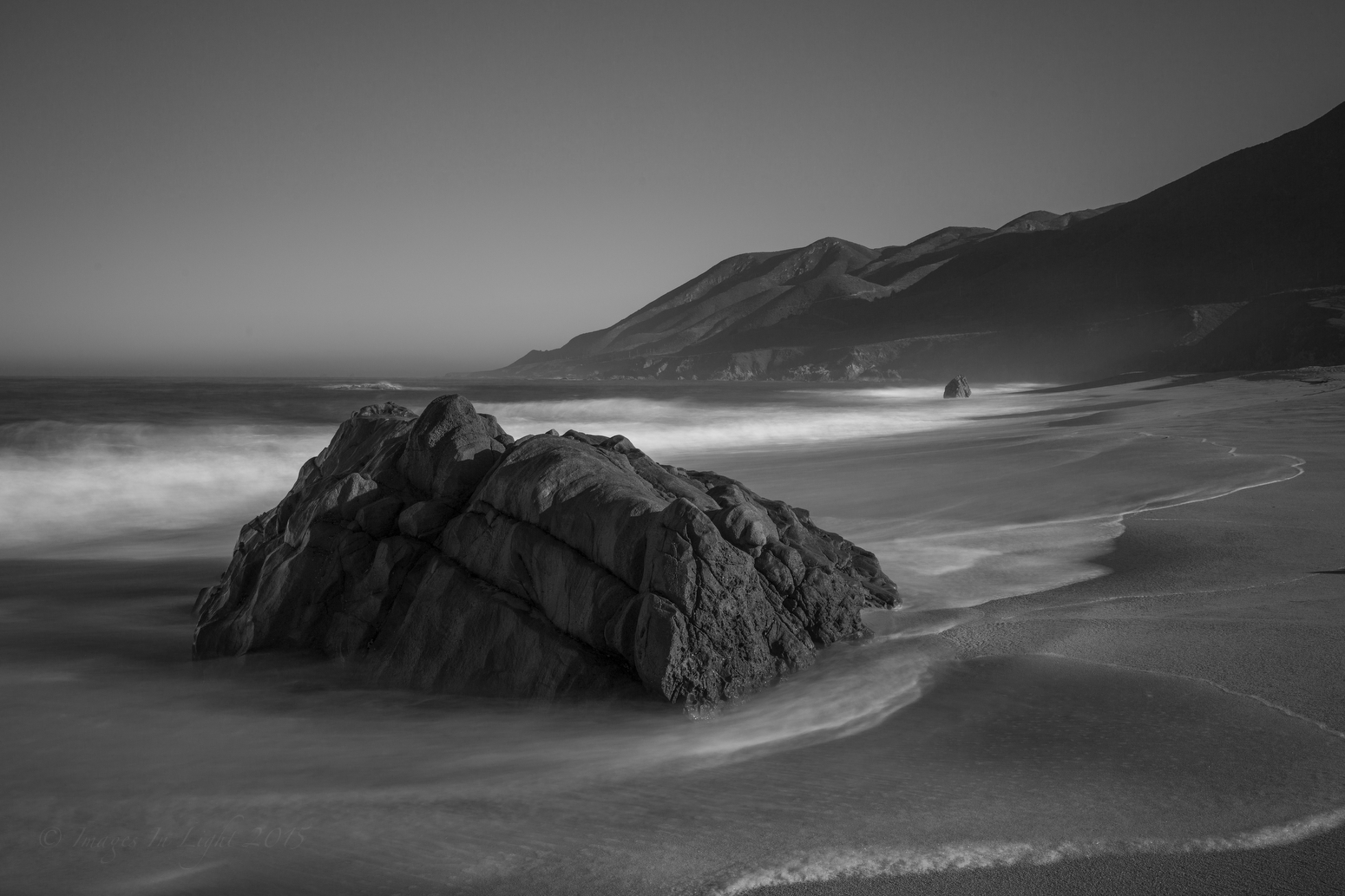
Monochrome

5D Mk III, EF 24-70 f/2.8 L II, Lee 10 stop ND filter, 5 sec at f/11.
Garrapata Beach

Black and White conversion done in Lightroom. I feel sometimes monochrome images can better convey mood than color and at other times color more efficiently tells the story. Regardless, telling the story is the key to an image, not what camera or what software was used. Composition and understanding of how your camera works are far better than your cameras ability to recover shadows or print large.

Ross

Friday, September 18, 2015

Full Frame DSLR, The Future?

Pentax is teasing a full frame DSLR for next spring

Friday, September 11, 2015

When will we hit ISO 1 Million

The new Sony A7sII

See specs here at DPReview

Its not far now until we hit ISO 1 million, the new Sony A7sII gets us one step closer, what is that going to mean in the near future? will we be taking photos at night like we do in the day? I'm guessing yes. Will we still need tripods? yes, I think so, for a while anyway.

Sony's rapid fire introduction of cameras is out pacing any company I have seen before. Some of these devices are being delivered with high price tags and not a lot of thought in to what a photographer really needs. I am still waiting on a Sony camera that will allow for a quick method of selecting an auto focus point,  please Sony a little thought in to ergonomics. I applaud the innovation, but more than that is needed, we are photographers and we want a device that gets out of the way, so we can think about what it is we are photographing and not what button do I find that function under.

Then there is uncompressed 14 bit RAW, when is Sony going to provide that? and just like that, they fix it, here.

See low light 4k video here

Ross

Monday, August 31, 2015

New Canon EF 35 f/1.4 L II


Now this should be a sweet lens, for those that need a fast and fairly wide lens, this will be the one you should have in your kit, great for landscape, event, portrait and low light.

Key features:
f/1.4L
9 bladed aperture
Blue Spectrum Refractive Optics
Two aspherical elements and one UD glass element in a 14 element, 11 group optical formula
Sub-Wavelength Structure Coating
Fluorine coating on the front and rear lens surfaces
Water resistant
$1799.00

Getting rave reviews so far.....

DPreview here and here

Photographyblog here 

Tear down at lens rentals here

The MTF chart looks very promising. 


From Canon:

New L-Series Lens is First to Feature Canon’s Proprietary Blue Spectrum Refractive Optics – That Achieves a Higher Level of Chromatic Aberration Correction For Superb Image Quality
MELVILLE, N.Y., August 27, 2015 – Canon U.S.A., a leader in digital imaging solutions, today introduced the new EF 35mm f/1.4L II USM lens for EOS system cameras – a wide-angle fixed-focal-length Canon EF lens that is the world’s first* to utilize the Company’s newly-developed and exclusive Blue Spectrum Refractive Optics (BR Optics). This new optical technology utilizes organic material newly developed by Canon to achieve a higher level of chromatic aberration correction than other existing technologies resulting in outstanding high-quality imaging performance.
“As the world leader in production of interchangeable lenses, having produced over 110 million EF lenses since 1987, it is with great excitement that we now introduce a revolutionary new technology to add to Canon’s unequaled optical heritage when it comes to chromatic aberration correction,” said Yuichi Ishizuka, president and COO of Canon U.S.A., Inc. “We continually strive to achieve the ideal lens performance, which has driven the development of Blue Spectrum Refractive Optics, found in the new EF 35mm f/1.4L II USM lens. This technology is yet another ‘first’ in optical design introduced by Canon to enhance the performance of our lenses for our customers.”

Canon’s proprietary Blue Spectrum Refractive Optics (BR Optics) incorporate a new organic optical material with unique anomalous dispersion characteristics for use in camera lenses. The molecular design of BR Optics refracts blue light (short wavelength spectrum) to a greater degree than other existing optical technologies including UD glass, Super UD glass and Fluorite, to control color fringing as effectively as possible. When placed between convex and concave lens elements made from conventional optical glass materials, BR Optics help to produce sharp images with outstanding contrast and color fidelity by thoroughly reducing axial chromatic aberration.
In addition to BR Optics, the new lens incorporates two aspherical elements and one UD glass element in a 14 element, 11 group optical formula. The EF 35mm f/1.4L II USM lens also features Canon’s proprietary Sub-Wavelength Structure Coating (SWC), applied to the rear surface of the first and second aspheric lens elements to help combat flare and ghosting caused by light rays entering the lens at a large angle of incidence. The lens also offers best in class minimum focusing distance at 0.28m (approximately 11 inches) resulting in an increased maximum magnification of 0.21x – ideal for capturing close-up subjects. Autofocusing is swift and virtually silent due to a rear-focus optical system and Canon’s original Ring USM focusing motor. Full-time mechanical manual focusing is also available even when the lens is set to AF mode.
The Canon EF 35mm f/1.4L II USM lens features improved durability over its predecessor. As with all L-series lenses, this new lens is highly resistant to dust and water ─ making it ideal for outdoor photography, even in harsh conditions. The high-grade design of the lens provides users with a substantial and luxurious feel, as well as optimal operability.  In addition, a fluorine coating on the front and rear lens surfaces helps to repel liquids and dust particles, and makes the lens easier to clean.
Pricing and Availability
The new Canon EF 35mm f/1.4L II USM lens is compatible with 72mm filters and will be supplied with Lens Hood EW-77B and Lens Pouch LP1219. It is scheduled to be available in October 2015, for an estimated retail price of $1,799.00. For more information including specifications and an MTF chart, please visit http://www.usa.canon.com/cusa/professional/products/lenses/ef_lens_lineup/lens_wide_pro.

Monday, August 24, 2015

Wide Angle Abstract


LR-7858_Ross_Murphy_201501
5D Mk III, EF 11-24 f/4 L, 11mm, f/11, 1/80th sec

The perfect lens for this shot, the 11-24 f/4 super wide angle lens, can be fun if you find the right composition.

EMP

 5D Mk III, EF 16-35 f/4 L IS, 16mm, f/6, 1/100th sec

This lens continues to amaze me.


Ross

Tuesday, August 11, 2015

Just for fun - Made With Matter


An App that I thought I would share, called Matter, its fun to play with and currently free in the App store. Make otherworldly images with a few simple taps.


Ross
Images In Light

Monday, July 27, 2015

silhouette


5D Mk III, EF 24-70 f/2.8 L II at f/3.5

Silhouette's can be a very interesting to shoot, finding the right background is key, here is a fern set against a brooding sky, converted to black and white in lightroom. I especially like to shoot people in profile like this one here or this one.

Ross

Images In Light

Tuesday, July 21, 2015

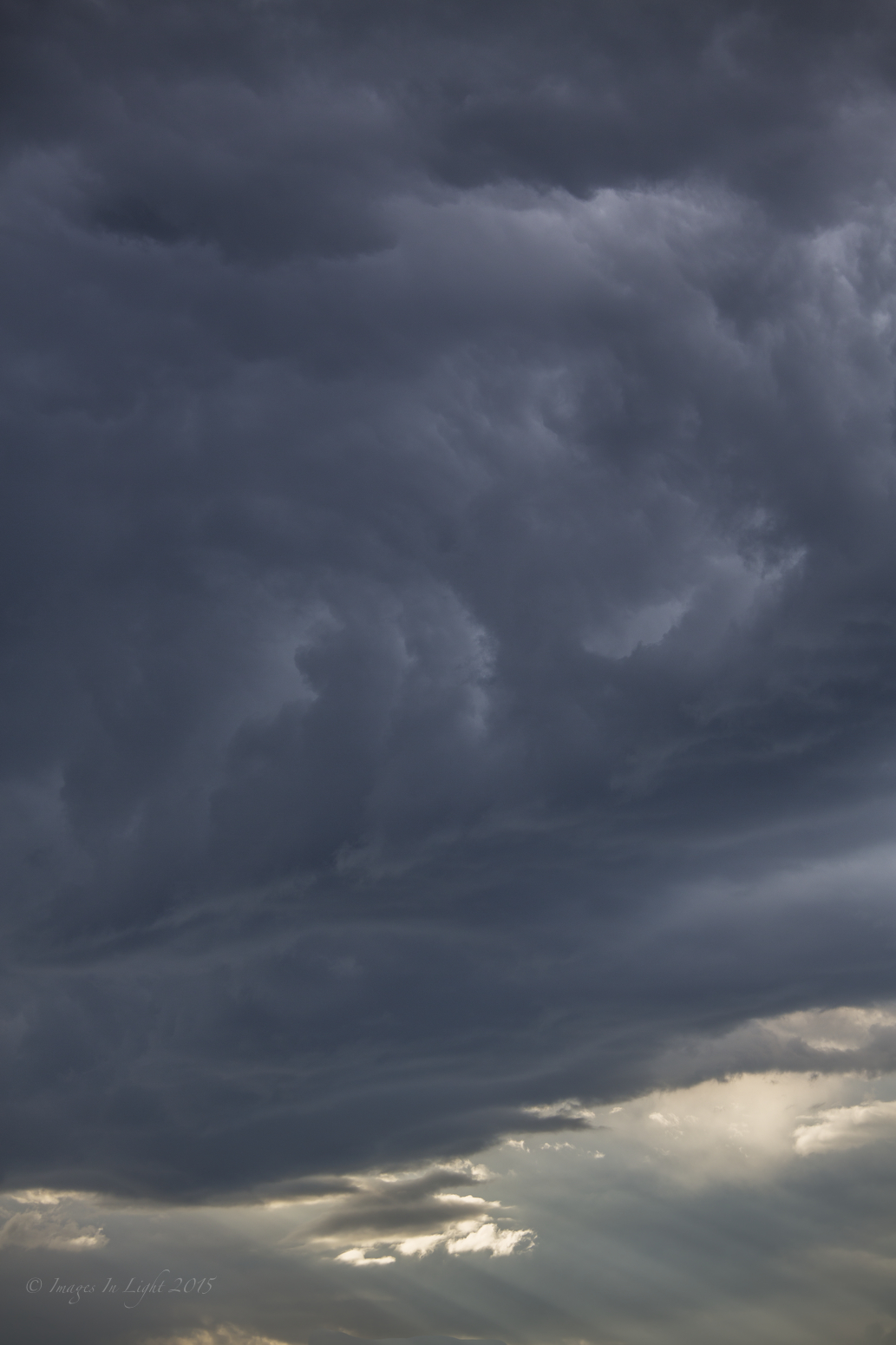
Stormy Weather


LR-0126_Ross_Murphy_201501

 5Dmk III, 24-70 f/2.8 L II, f/9, 1/125 sec, 35mm hand held

Ominous

5Dmk III, 70-200 f/4 L IS, f/4, 1/800 sec, 100mm hand held

LR-0168_Ross_Murphy_201501

 5Dmk III, 24-70 f/2.8 L II, f/10, 1/160 sec, 35mm hand held

I love shooting weather, one of these days I'll go storm chasing in the Midwest and chase some real weather, until then I will have to work with the occasional hurricane remnant that works its way up from Mexico like this one last weekend in Big Sur. 

I head out whenever possible if weather is in the forecast, the next trip to Yosemite will be based on that. Incoming weather is always a good opportunity for landscape photography, it sets a mood that sunny blue sky's just can't do. Ideally it happens at sunset or sunrise, adding that wonderful light to a moody sky.

Ross

Thursday, July 16, 2015

Panasonic DMC-GX8 announced


Panasonic announced the new GX8 with some pretty nice specs for a M43 (micro 4/3) camera, 20mp's is a first for a M43. Dynamic range is supposed to be increased and new processing power is supposed to keep pace with the 16mp GX7's 6fps speed continuous AF. The Dual IS system, sounds very interesting. It combines sensor and optical lens stabilization.

It seems Olympus has gone to sleep and left Panasonic to do the innovation in the micro four thirds realm, not sure why Olympus has been so quiet, perhaps they are preparing a 20mp sensor from Sony also. If this f/.95 lens was AF, I would consider this option. Come on Olympus, give us some really fast primes. The lens options are not bad, but not good enough to budge me to the mount.

Review: Imaging Resource here
Pocket Lint here
Camera Labs here
Phoblographer here
DPreview here


  • 20.3 MP Digital Live MOS Sensor
  • Venus Engine Image Processor
  • Micro Four Thirds System
  • Tilting 2.36m-Dot 0.77x OLED EVF
  • 3.0" 1.04m-Dot Vari-Angle Touchscreen
  • 4K UHD Video Recording at 30/24 fps
  • Built-In Wi-Fi Connectivity with NFC
  • 10 fps Shooting with AF-S and ISO 25600
  • DFD AF System, 4K Photo Modes
  • In-Camera Image Stabilization, Dual I.S.

  • Priced at $1198 body only, it will be a hard sell for a small sensor camera, but if image quality comes in high, it would be nice used with some of the fast primes from Panasonic and Olympus.

    See the preview at DPReview here 

    Ross
    Images In Light


    Wednesday, July 1, 2015

    The right lens for the job


    Image: Soberanes Point, 5d Mk III, EF 16-35 f/4 L IS, f/13, 18mm, 1/100 sec, hand held.


    I have been in search of the right wide angle lens for a long time for my system, finally Canon produces with the EF 16-35 f/4 L IS, after a few weeks of using this lens I could not be happier.

    If you are looking for a good landscape lens, this is the one, even adapted to an A7r II with a Metabones adapter this will produce sharp images with plenty of resolution to match even the new 5DSR.

    I would say this is the best wide angle lens on the market, I have tested out the EF 11-24 f/4 L and I would rather have this lens any day of the week. The 11-24 f/4 is a great lens, but this is a lot smaller, can use filters and fits my style of shooting better than the 11-24.

    Ross
    Images In Light

    Getting the right shutter speed for motion


    Garrapata Waves

    Garrapata Beach. 5D Mk III, 70-200 f4 L IS, 1.3 sec at f/13

    With neutral density filters you can get the shutter speed you want at almost any time of day, on this very bright morning at Garrapata I used a 6 stop filter on a 70-200 f/4 L IS lens to isolate the rocks and show movement in the waves. 

    It takes a while in the morning for the sun to get over the hill behind the beach, so when it arrives its pretty intense in the summer, holding back the light with a neutral density filter helped to cut down on that very bright sun and give me the shutter speed I wanted to show some motion in the waves without completely smoothing out the water.

    I could have used a 10 stop filter but the effect would have been more than I wanted, by using aperture priority I could have easily gone to 30 seconds and completely smoothed out the ocean, but I was looking for crashing waves with a small amount of motion to show the interaction with the rocks.

    I have found for slight motion in waves .6 to 2 seconds is a pretty good rule of thumb to use depending on wave height and light conditions.

    Ross